
About the Church
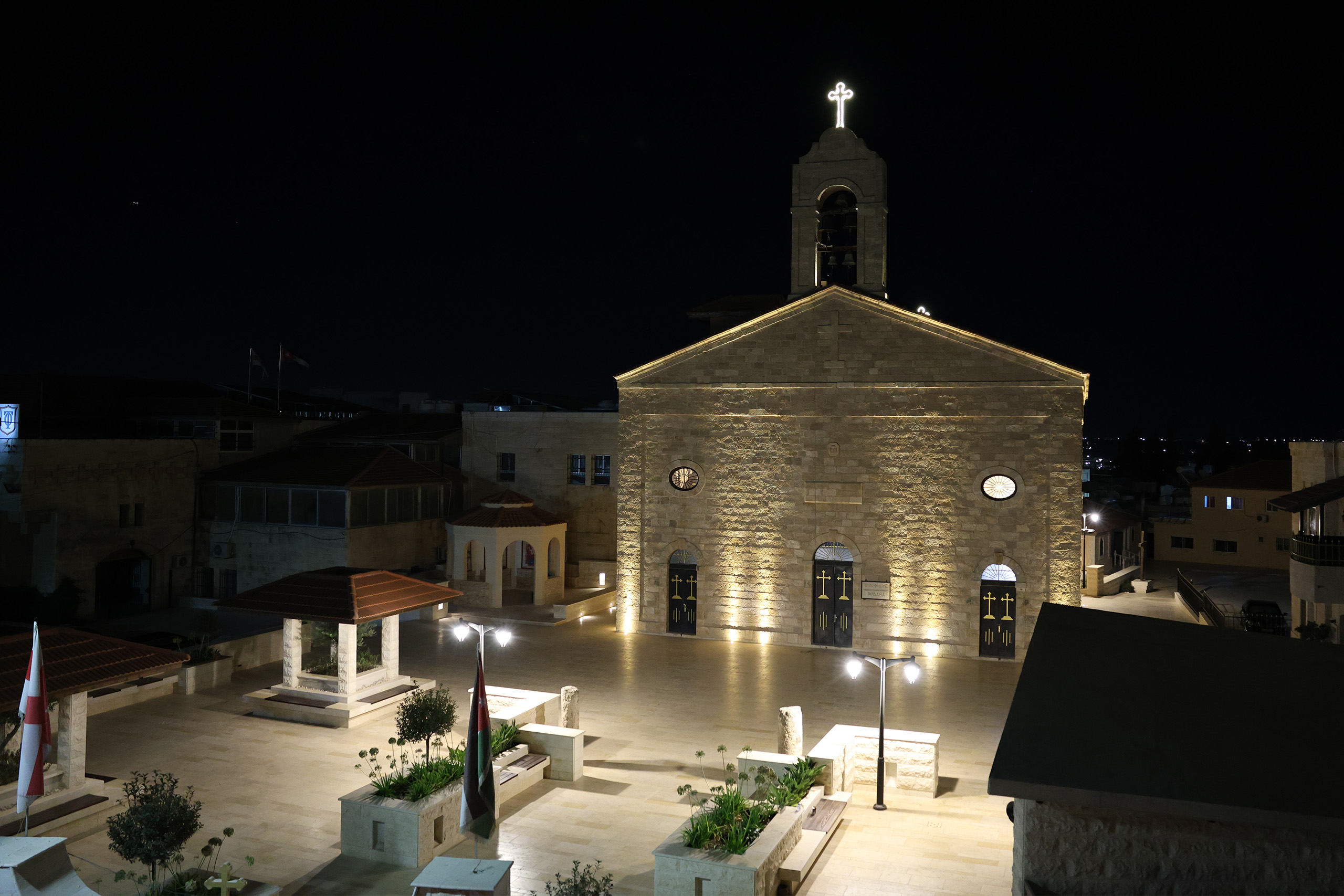
The Greek Orthodox Church of St. George is located in the heart of Madaba, Jordan, and is one of the most prominent religious and historical landmarks in the region. The current building was erected in 1896 on the remains of an older Byzantine church dating back to the 6th century AD, a period when Madaba was renowned for its Byzantine mosaic art, serving as a major center for this art form in the Levant. The church is known internationally as the “Church of the Map” because its floor houses one of the greatest visual testimonies to biblical geography: the Madaba Mosaic Map. Dating from the second half of the 6th century AD, this map is the oldest known mosaic map of the Holy Land to have survived to this day. This historical masterpiece was discovered during construction work in the late 19th century and has since become one of the most important archaeological finds related to the history of biblical geography.
Madaba Mosaic Map
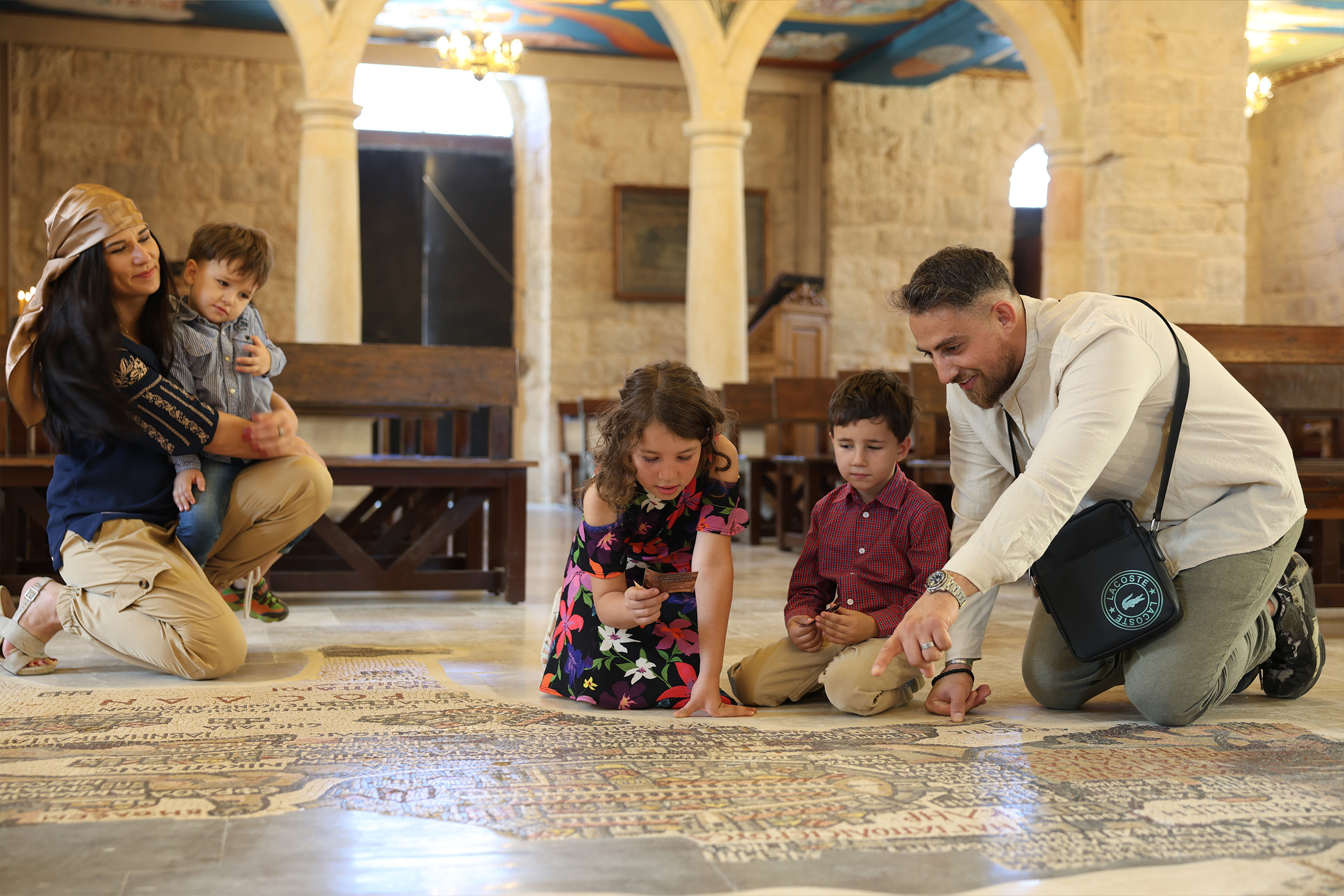
The map, spread across part of the church floor, is composed of millions of small, colored stone fragments that formed a vast mosaic, originally measuring approximately 21 meters long and 7 meters wide. This mosaic depicts a wide area of the Near East, stretching from Lebanon in the north to the Nile Delta in the south, and from the Mediterranean Sea in the west to the Sahara Desert in the east, and includes the names of nearly 150 cities and historical sites in the region.
At the heart of this map, Jerusalem takes center stage, depicted in meticulous architectural detail, showing its walls, streets, and major landmarks as they appeared in the Byzantine era. This has made it an invaluable resource for archaeologists and historians seeking to understand the geography of the Holy Land in the early Christian period.
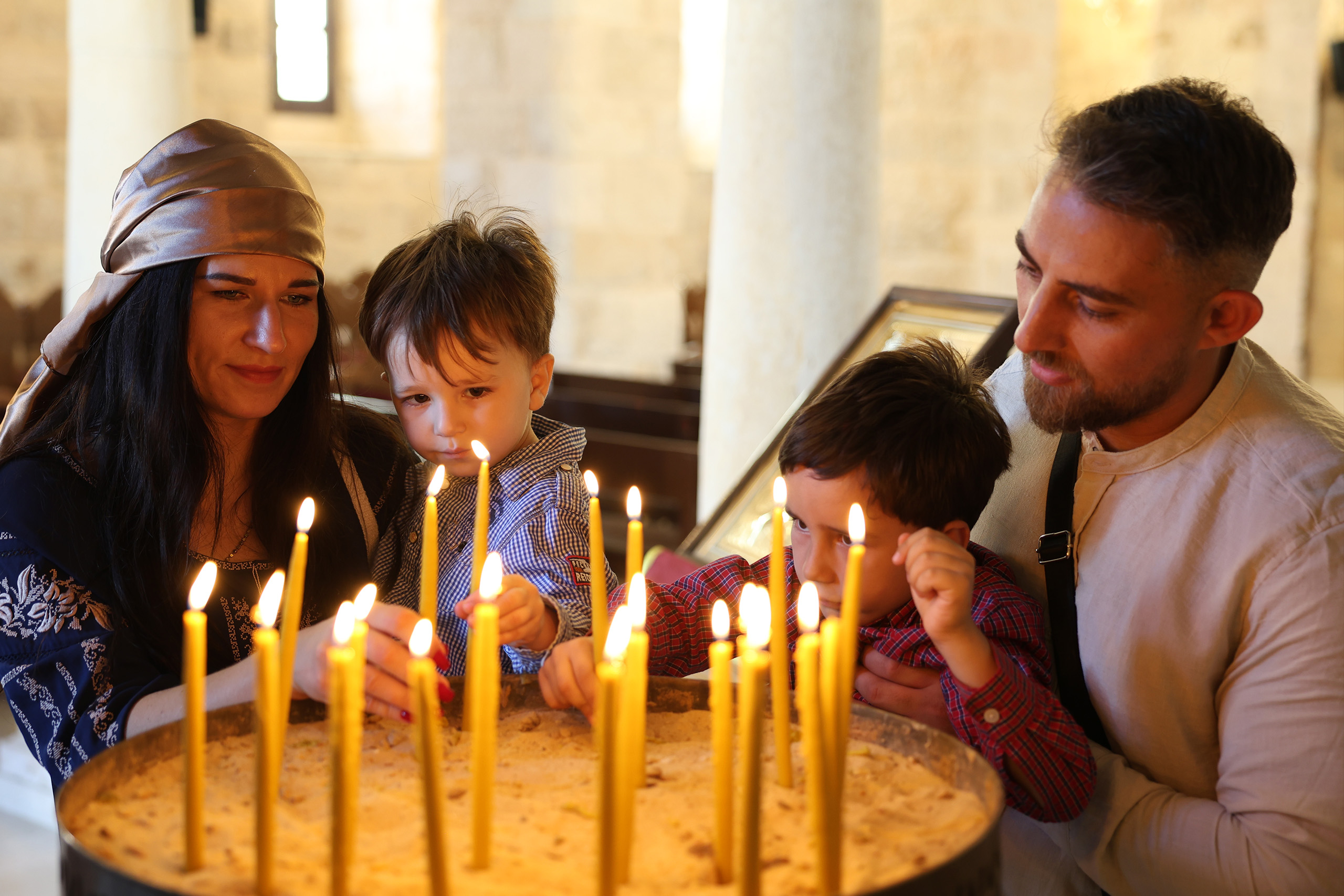
The Church Between Faith, History, and Welcoming Visitors
Since the discovery of this unique mosaic in the late 19th century, the church has become a destination for pilgrims, scholars, and tourists from around the world. Here, living Christian faith meets historical heritage and Byzantine art, reflecting Madaba’s enduring prominence throughout the centuries, earning it the global title of “City of Mosaics.”
Today, the church remains a vibrant spiritual center for the Orthodox community in Madaba and one of Jordan’s most important religious and tourist sites. Visitors encounter early Christian history alongside a unique artistic legacy that preserves the image of the Holy Land as seen by Byzantine artists nearly fifteen centuries ago.