

 Close
Close
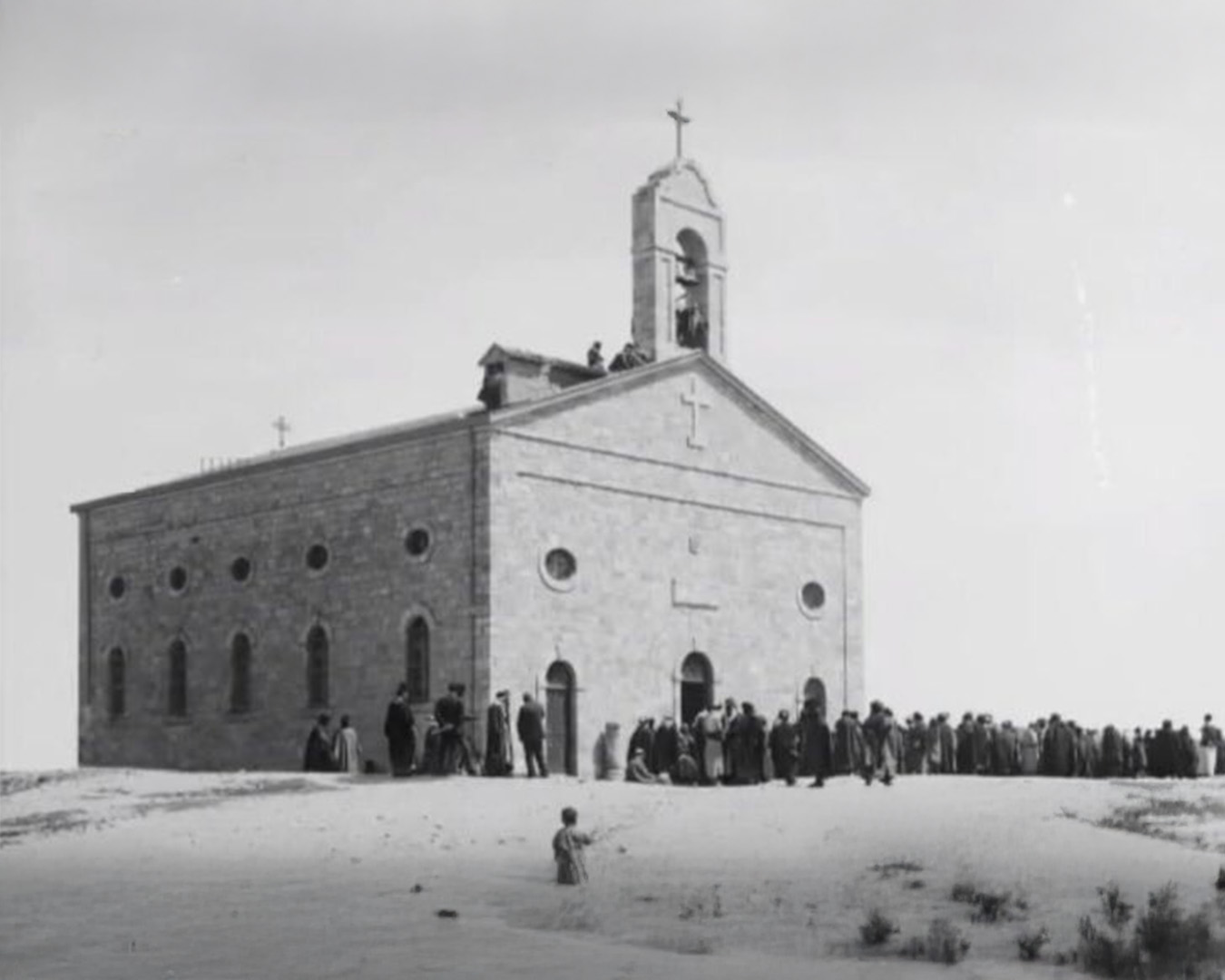
This photograph shows the Church of St. George in Madaba in 1896, after its reconstruction. It stands in an open place.
The scene depicts a gathering of the city’s inhabitants in front of the church, reflecting the community’s connection to this place at that time, just a few years before the discovery of the famous mosaics within.
Madaba, the city of mosaics, is distinguished as one of Jordan’s most prominent religious tourist destinations, where civilization meets history, and faith is intertwined with daily life. Its ancient churches and old streets tell vivid stories of faith and deep roots, while its people welcome visitors with genuine Jordanian hospitality, offering a rich experience that blends historical beauty with spiritual depth.
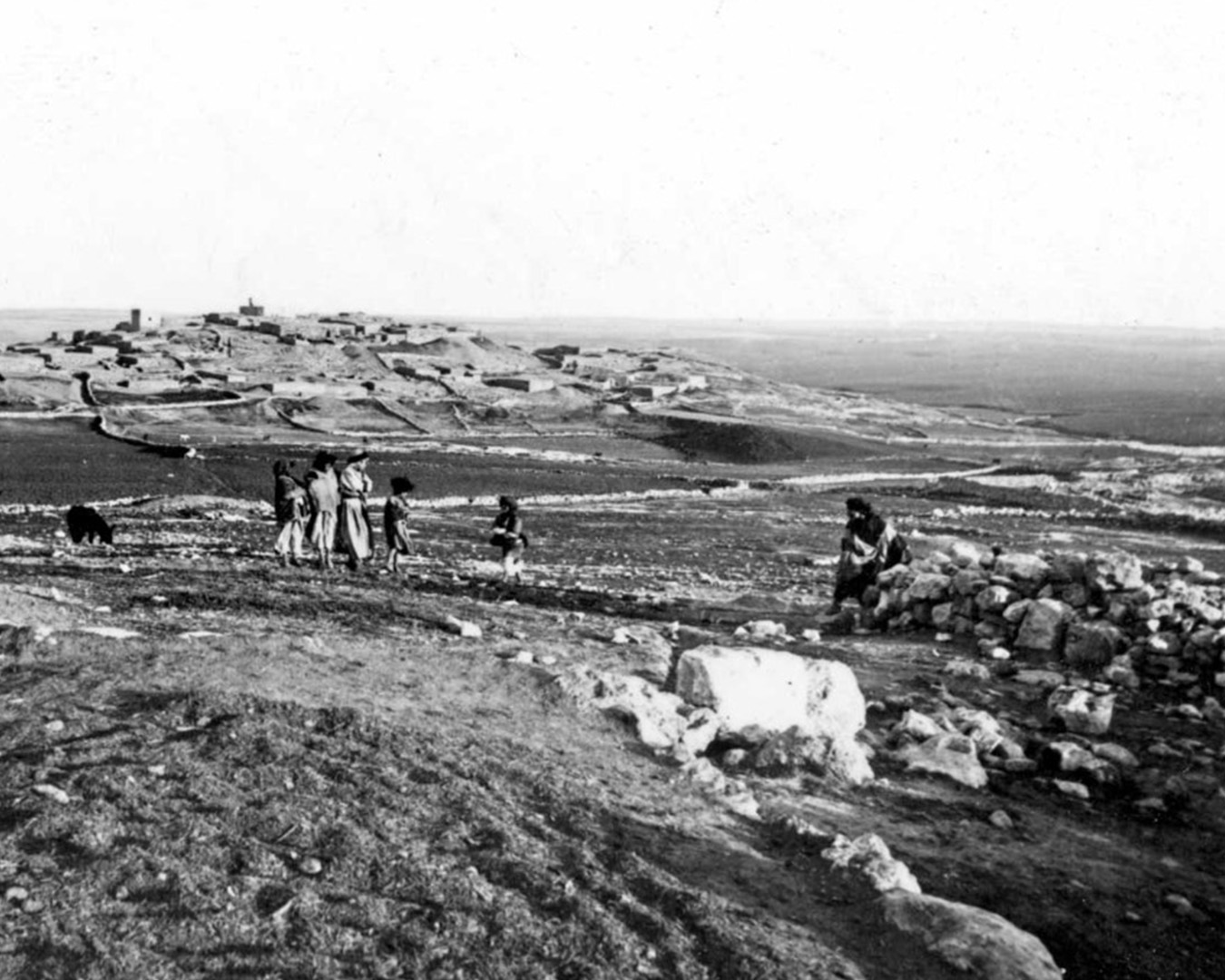
This photograph shows a general view of Madaba as seen from the west in 1896, with the settlements on the hill appearing scattered and simple.
The city is surrounded by open land and dirt roads, with activities associated with rural life, reflecting the nature of Madaba at that time.
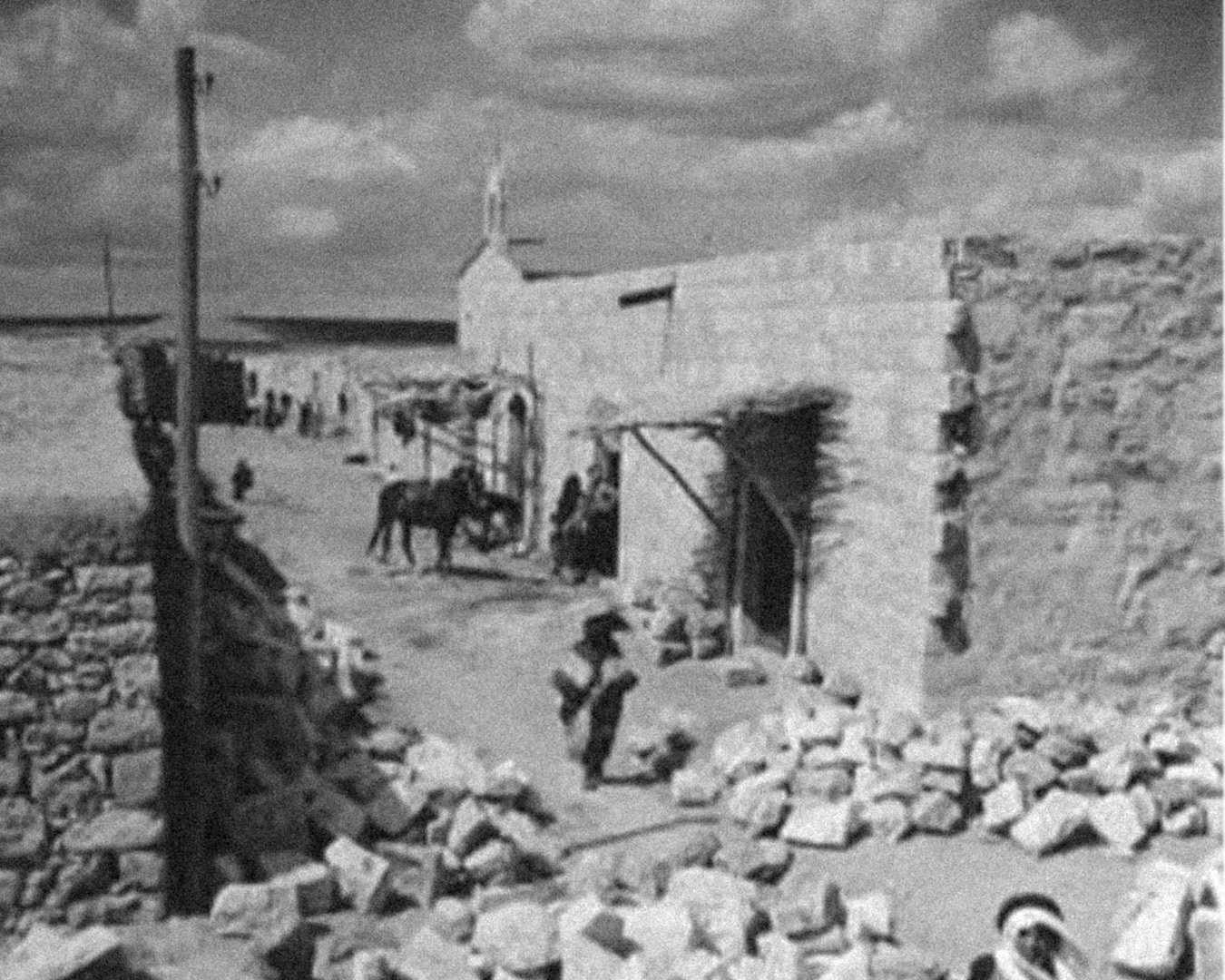
This photograph depicts a street in Madaba in the late 19th century, with stone buildings lining both sides of the road in a simple urban fabric.
Telegraph poles are visible in the scene, reflecting the introduction of modern communication and connecting the region to a wider network within the Ottoman Empire. The photograph also shows the daily movement of residents and ongoing construction work in the area.
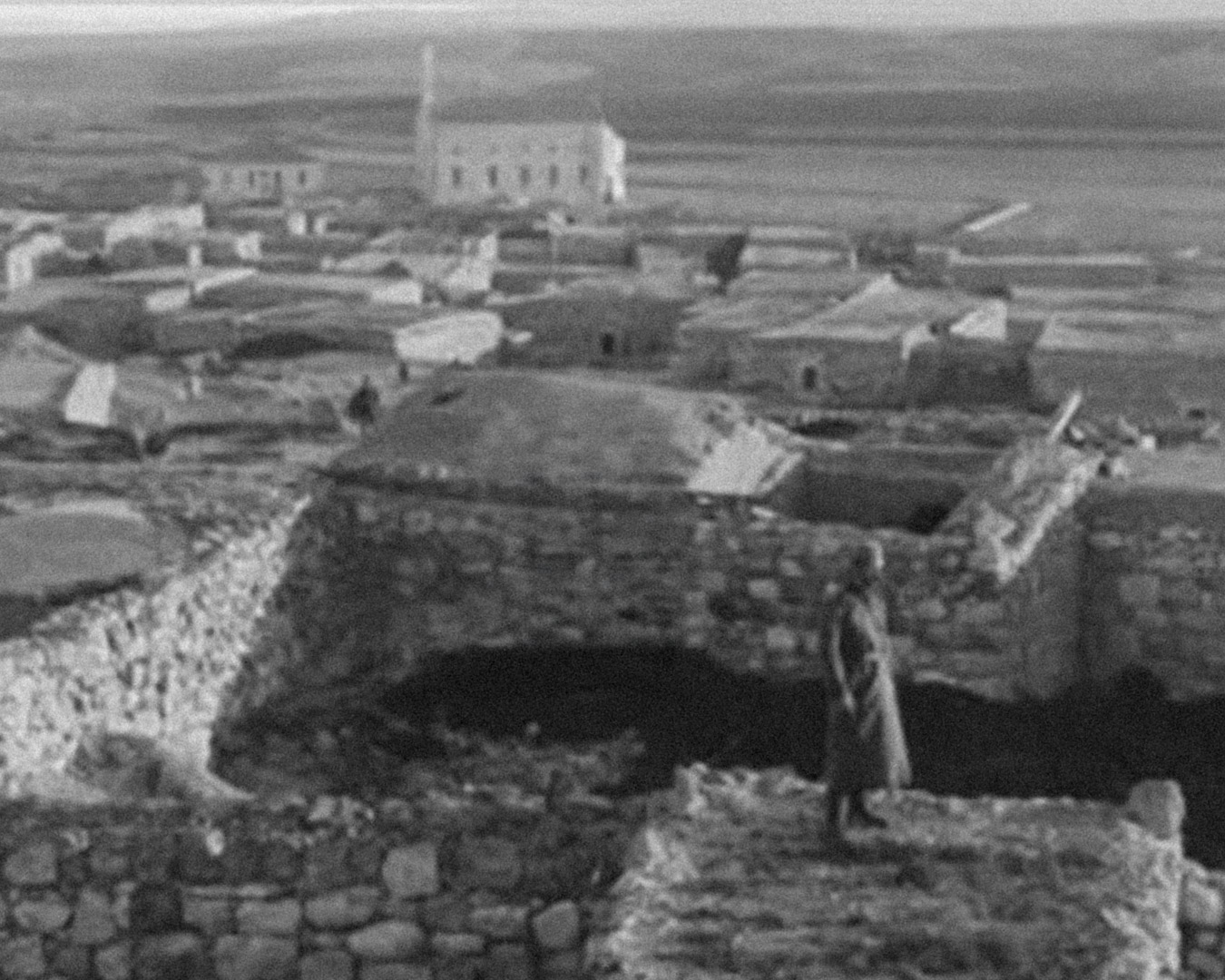
This photograph shows a general view of Madaba in the late 19th century, where the stone buildings appear closer together and more spread across the hill than in other images from the same period.
One of the city’s main buildings stands out in the background, while in the foreground, low stone walls used to divide spaces are visible. Open spaces surround the city, reflecting the landscape of that era.
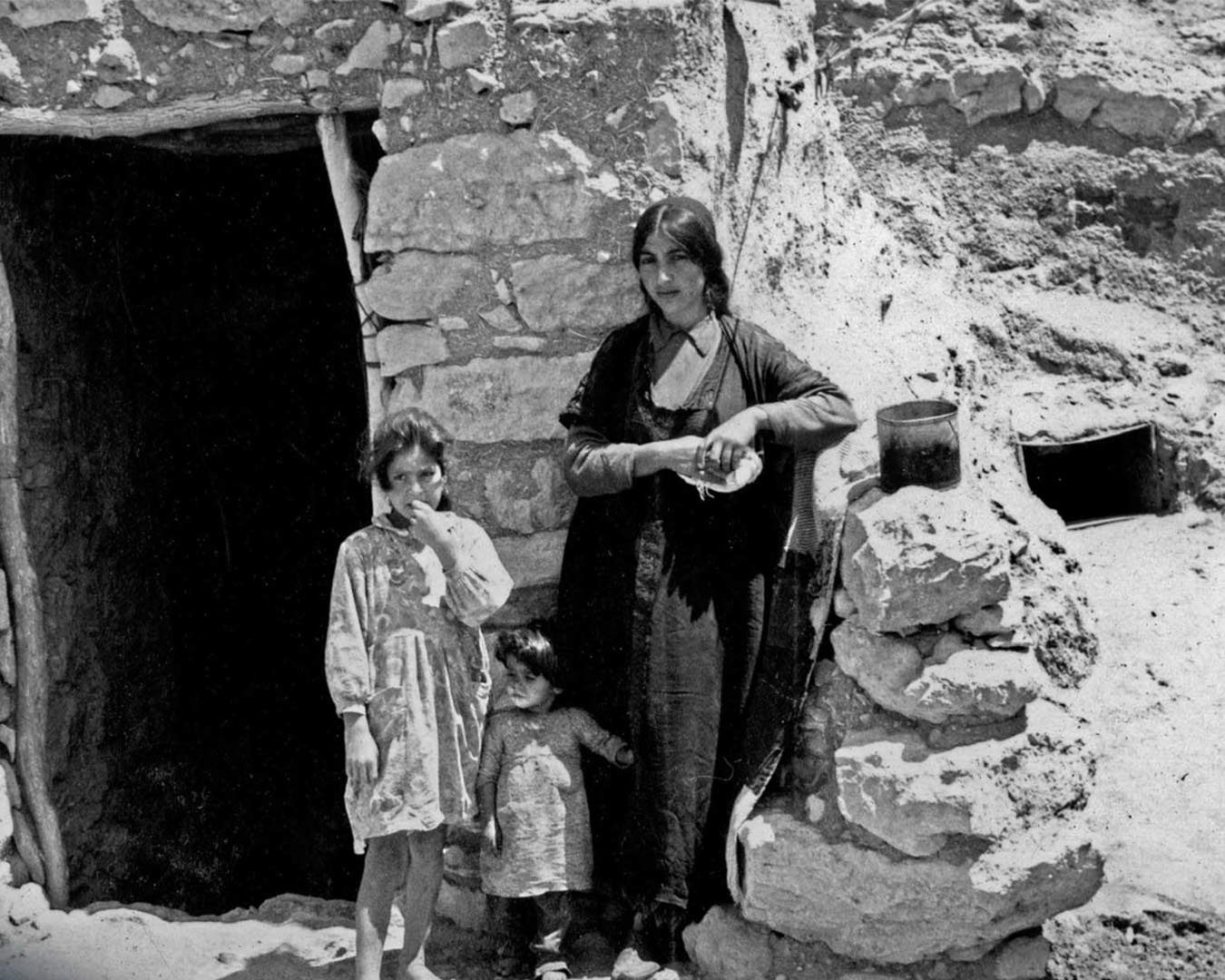
This photograph reveals a rare glimpse into the early stages of settlement in Madaba in the late 19th century, showing a woman standing at the entrance of a simple cave with two young girls.
At that time, the first families used caves as temporary dwellings before beginning to build the stone houses that later formed the nucleus of the city. This scene reflects the living conditions of that period, where beginnings were characterized by simplicity and adaptation to the surrounding environment.
The photograph not only documents a family moment but also points to a foundational stage in Madaba’s history, as the signs of stability gradually began to appear in the city.
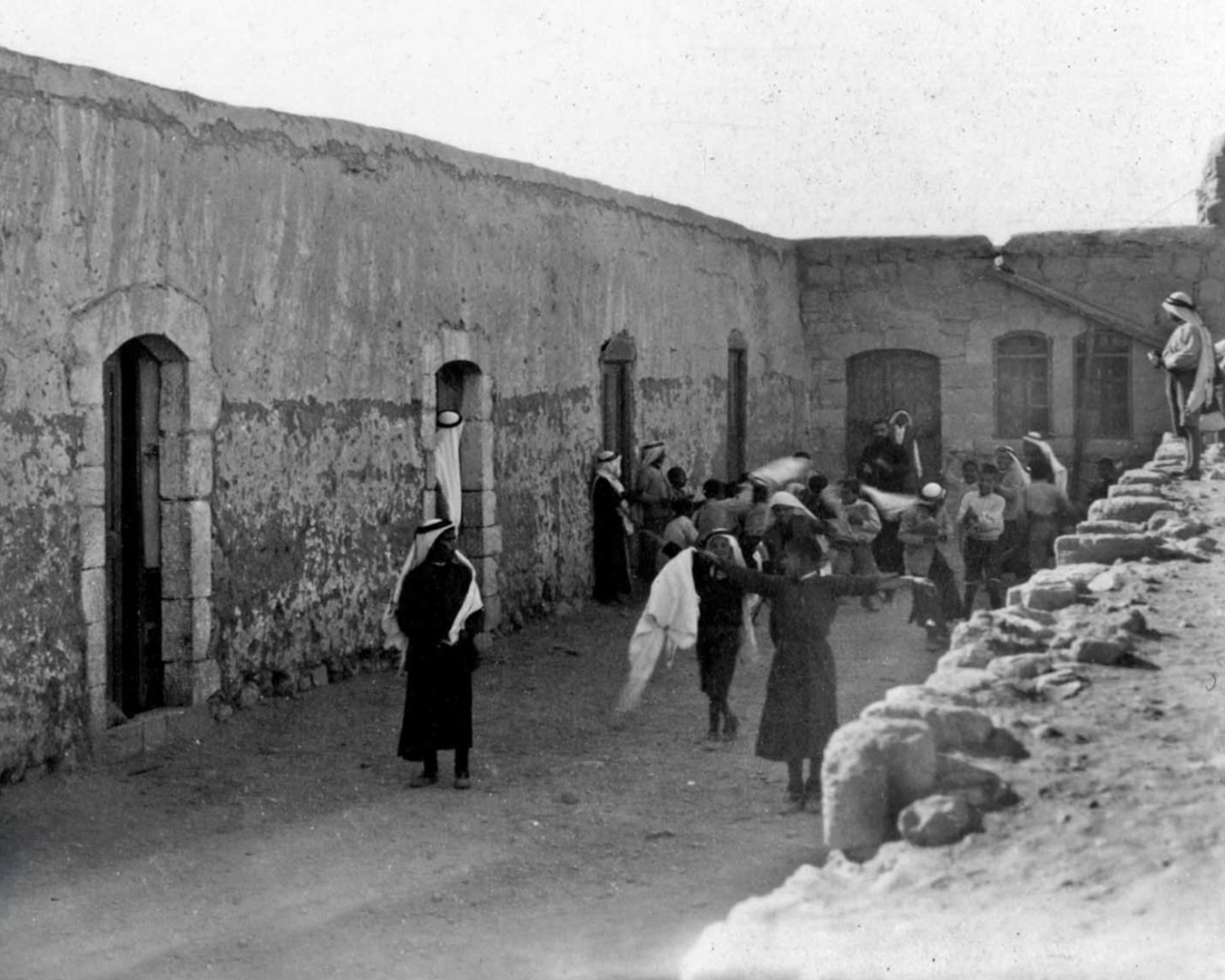
This photograph shows one of the old educational buildings in Madaba.
The building appears to consist of adjoining rooms with multiple entrances, a layout that reflects its use as an early educational space, as evidenced by the group of children in the surrounding courtyard.
This image captures an aspect of daily life related to education within the simple environment characteristic of the city’s early days.
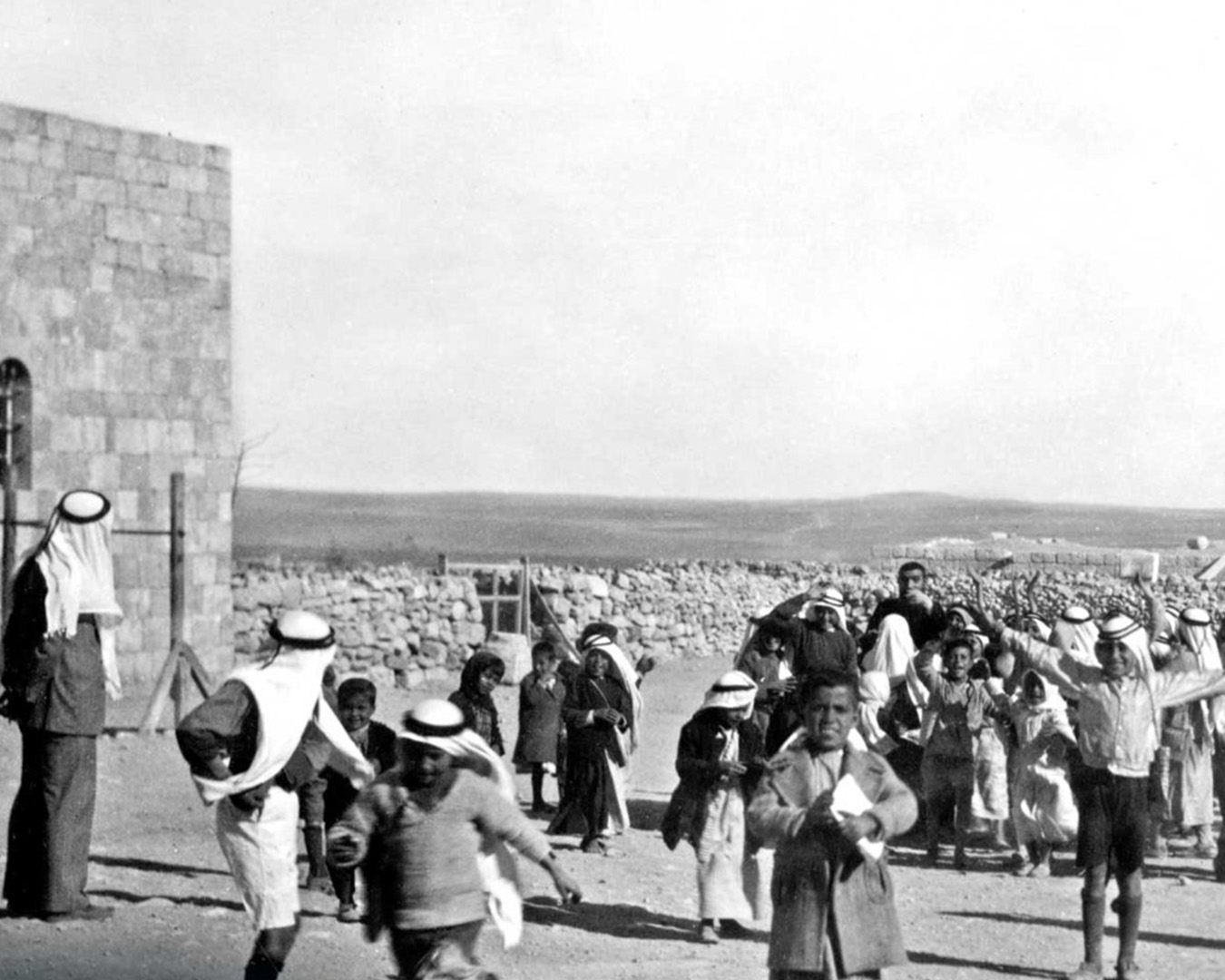
This photograph depicts student activity at a school in Madaba in 1933, where children gather in an open courtyard to participate in group games.
This scene reflects an aspect of school life outside the classroom, where such activities formed part of the students’ day, in a simple environment where the learning space blended seamlessly with its surroundings.
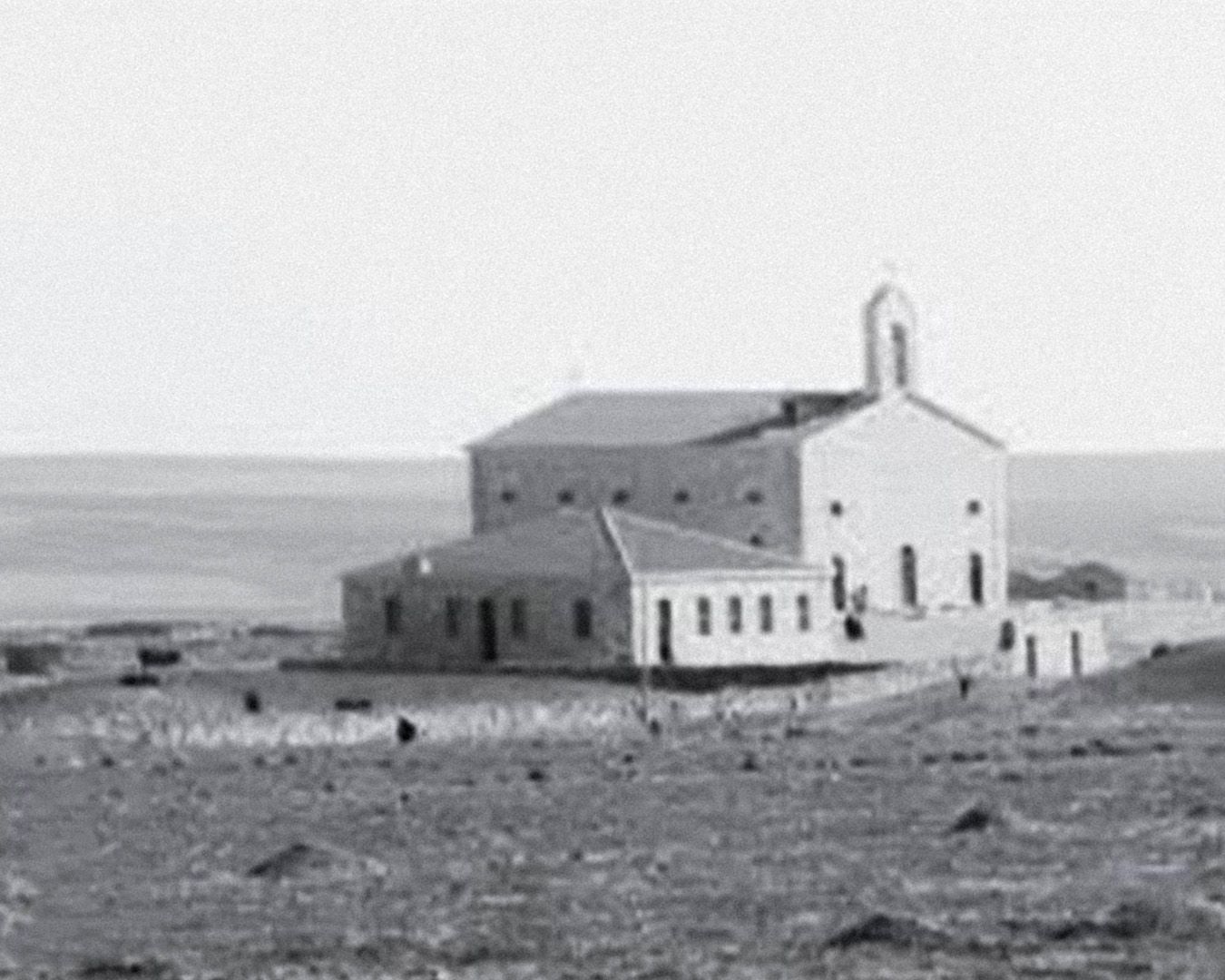
This photograph shows St. George’s Church in Madaba in 1914. The building appears in its early form, with clear and simple architectural features.
Low-rise buildings are visible alongside the church, indicating surrounding urban development at that time. Open land extends around it, reflecting the nature of the city then as a small, sprawling town still retaining its rural character.